
 Tiếng Việt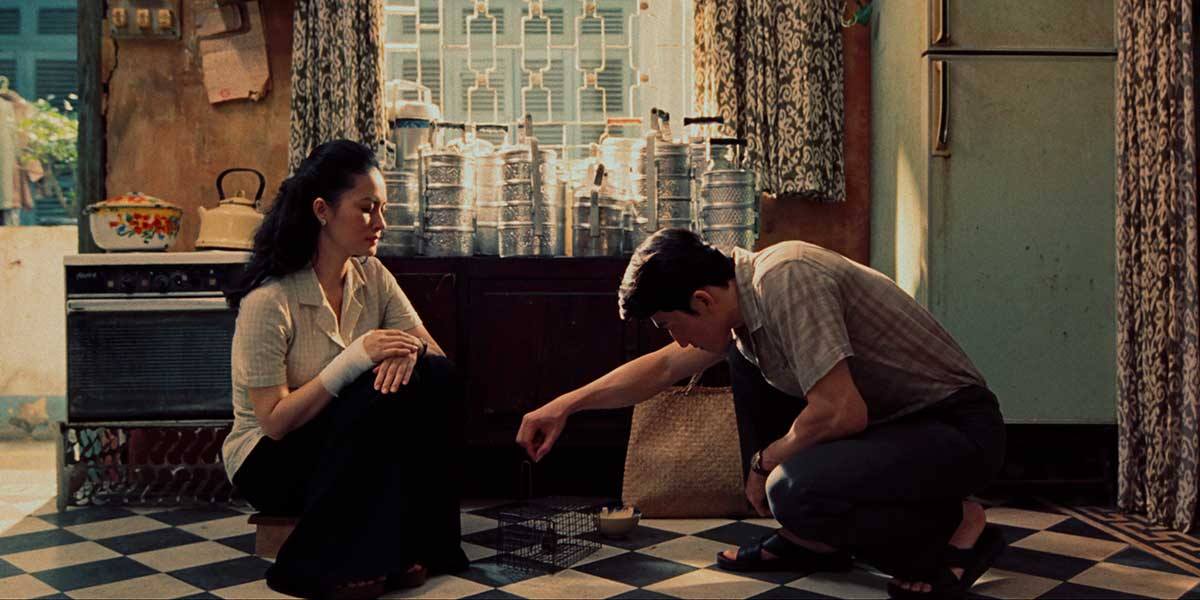
“Quán Kỳ Nam” is regarded as one of the most visually stunning Vietnamese films in recent years. Shot entirely on celluloid, the film carries a distinctive palette and an emotional depth that digital formats rarely achieve.
Following the success of Song Lang, director Leon Quang Lê returns to cinema to the anticipation of Vietnamese film enthusiasts. After a seven-year absence since his acclaimed debut, Leon steps back into the artistic arena with a new project that continues the emotionally rich and deeply personal visual style that defined his name.
Quán Kỳ Nam portrays the lives of people from different social classes, professions, and ages living together in an old apartment complex in Ho Chi Minh City during the 1980s.
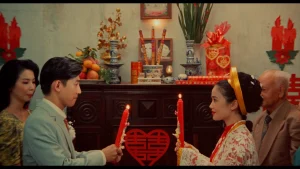
The film has been widely praised by audiences and critics alike as one of the most beautiful Vietnamese films in recent memory. A major reason behind this acclaim is Leon’s bold choice to shoot the entire film on celluloid — an extremely rare approach in contemporary Vietnamese cinema. Film stock lends the work its signature texture, lighting, and subtlety that digital cameras struggle to replicate. From production design to lighting, color, and camera placement, every detail is meticulously crafted to create a visual world that is both nostalgic and emotionally resonant. As a result, Quán Kỳ Nam stands out as a visual milestone in today’s Vietnamese film landscape.
Every frame in Quán Kỳ Nam is carefully composed. The film touches viewers through the quiet beauty of ordinary life, of love, and of small, sincere human moments.
However, after three days in theaters, by noon on February 12, the film had grossed only 1.6 billion VND and was allocated just a single daily screening in many cinemas. Calls from filmmakers and audiences urging support for Quán Kỳ Nam have since spread widely across social media.
Why is “Quán Kỳ Nam” considered the most visually beautiful Vietnamese film in recent years?
One of the film’s most striking elements is its complete reliance on 35mm film, a rare and ambitious choice in today’s Vietnamese industry. Director Leon Quang Lê chose to self-produce the project to maintain creative control over the visual medium, believing that celluloid carries a “soul” that digital imagery cannot reproduce.
The colors, light, and signature grain of film create a harmonious blend between characters and their environment, between memory and the present. Despite the high cost, technical complexity, and the need to retrain the crew, Leon remained committed to celluloid to preserve the film’s emotional integrity.
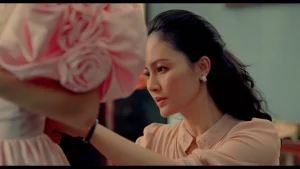
Speaking to Dân Việt, director Leon Quang Lê shared:
“I chose to shoot on film because I’ve always been fascinated by its unique ‘soul.’ It’s no coincidence that people love film-emulation apps on phones or editing software. Even without technical knowledge, audiences can feel that film images have depth and emotion — something overly sharp, overly digital images sometimes lose. For me, absolute sharpness can make an image feel unreal.”
“Back when I made Song Lang, I wanted to shoot on film, but the producer was concerned about the cost. This time, for Quán Kỳ Nam, I decided to produce it myself so I could choose the visual medium. And I knew from the beginning it had to be film. Celluloid contributes immensely to the spirit of the movie. To me, shooting on film is like working with a living soul.”
Discussing the challenges of working with 35mm film, Leon said:
“Film is extremely demanding. If you’re not careful, even a small mistake can ruin the color or exposure entirely. Working with film forces you to cherish every single frame. In return, that sense of care gives you an emotional depth that digital can never replace.”
“Many assume cost is the biggest obstacle. While film is more expensive, the real reason filmmakers hesitate is convenience — digital is fast, accessible, and much easier to operate.”
“But that process — patience, respect, meticulousness — is exactly what gives the film its soul.”

Aesthetic choice, not nostalgia
Speaking to Dân Việt about the use of film stock, director and Meritorious Artist Bùi Trung Hải noted that Leon’s decision is not merely nostalgic, but aligned with a global filmmaking trend that persists despite technological advancement.
“If you look internationally, shooting on film is not tied to any specific era. For example, Anora (Palme d’Or, Oscars 2025), or directors like Christopher Nolan, Quentin Tarantino, and Paul Thomas Anderson — they only shoot on film regardless of the story’s time period. It’s an aesthetic choice. Film remains the gold standard of cinema.”
“Fundamentally, film captures the richness of reality more naturally. Digital sensors depend partly on algorithms to interpret colors and textures during recording. Film, however, reproduces the inherent diversity of real life without digital mediation.”
Dân Trí